Lakota Book Drive Update

by ThinLine on May 26, 2011

Friends of the horse world. Thanks so much for your caring and concern that has resulted in virtually a new library for the children at Wounded Knee . The combined art therapy – horse therapy program this July needs your help also. This program is an innovative one for underserved children on the reservation, and is conducted jointly by the Lakota tribe and the art therapy department of George Washington University.Two things are needed:
1.Grooming supplies. The children have none, and use old hair brushes when they can find them. Donations of these will help in the equine therapy program, where grooming helps develop rapport between child and horse.
2. Monetary donations. Any contribution will help defray both the cost of art materials and the horse participation. All contributions are fully tax deductible. Please help bring this program to America’ neediest and most deserving people.
Please sent the grooming materials and make the checks out to:
Art Therapy Graduate Program/ George Washington U./ attn Dr. Elizabeth Warson
1925 Ballenger Ave. Suite 250
Alexandria, VA 22134

We say thank you, and the Lakota Nation says wopila!Friends of the horse world. Thanks so much for your caring and concern that has resulted in virtually a new library for the children at Wounded Knee . The combined art therapy – horse therapy program this July needs your help also. This program is an innovative one for underserved children on the reservation, and is conducted jointly by the Lakota tribe and the art therapy department of George Washington University.Two things are needed:
1.Grooming supplies. The children have none, and use old hair brushes when they can find them. Donations of these will help in the equine therapy program, where grooming helps develop rapport between child and horse.
2. Monetary donations. Any contribution will help defray both the cost of art materials and the horse participation. All contributions are fully tax deductible. Please help bring this program to America’ neediest and most deserving people.
Please sent the grooming materials and make the checks out to:
Art Therapy Graduate Program/ George Washington U./ attn Dr. Elizabeth Warson
1925 Ballenger Ave. Suite 250
Alexandria, VA 22134

We say thank you, and the Lakota Nation says wopila!

{ 0 comments }

Back Pain and Riding

by ThinLine on April 26, 2011

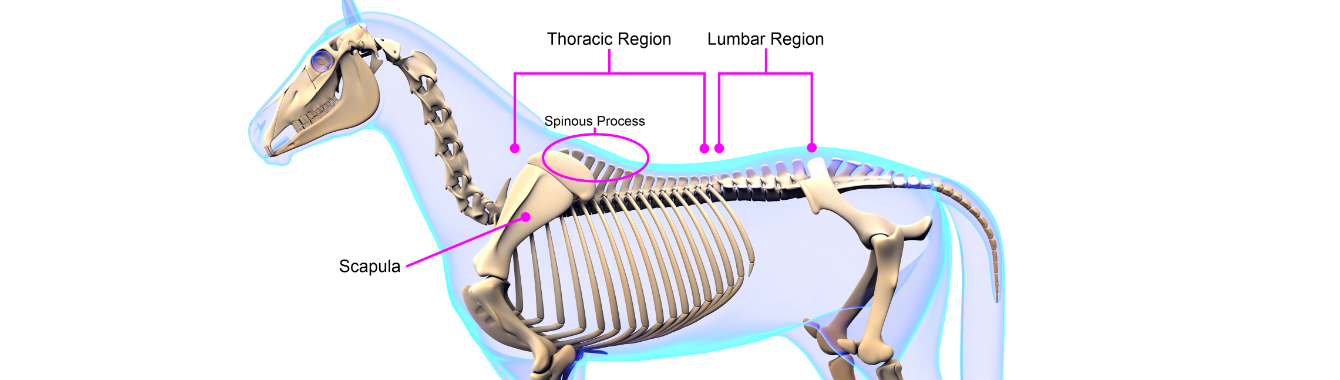
Certain legends become self perpetuating, and back pain in equestrians is among them. As a spine care specialist and neurosurgeon, I literally built a career getting riders back in the saddle after being told by their physician that back pain meant that they should cease riding. A look at this issue reveals that, while there is a correlation between riding and back pain, it is no greater than many other activities. There are reasonable ways to prevent and treat back pain in riders. The book titled The Rider’s Pain Free Back goes into extensive detail, but here are some of the highlights.

Let’s look at history to see if there is a correlation. No place is more historic than Pompei, Italy. This was an entertainment center for Rome, and was frequented by politicians and the military, the two classes of equestrians of the era. Riding in stirrup-less saddles would inspire these people to frequent the taverns of Pompei. All of these had a marble step in front of their bar, the early equivalent of the brass rail. As the
patrons flexed a hip to place a foot on the step, it would alleviate their sciatica, thus inspiring them to stay longer and drink more, possibly producing further relief. The addition of stirrups lessened seat contact, but rider populations increased and back pain became entrenched in their ranks.

Both horse and rider play an equal part in preventing and treating back pain. First the horse. There are two gait groups of horses as far as back pain is concerned. The horizontally gaited ones, of which Arabians, Tennessee Walkers, and Paso Finos are examples, have a gait where force is directed horizontally. This means less upward impact on the base of the rider’s spine. Vertically gaited horses , such as some Morgans and Hackneys, are more animated in their movements and have a measurable increase in upward impact against the rider’s spine. These are generalizations, and there are notable exceptions within all breeds. Add the rider, and you add what I call harmonics. Harmonics are the natural movements of the particular rider’s spine and how they blend with those of a particular horse. The smaller rider may be capable of more rapid spine flexibility movements, much like the guards in basketball. The tall thin rider will generally have a more willowy natural spine movement capability. My advice is, no matter how good that black horse looks, you need to try him out first. My experience has suggested that the sitting trot is the quickest way to find out if harmonics are present. If the sitting trot is comfortable, you’ve got something.

Let’s now look at who are today’s riders. If you look at American riders as a pie chart, the biggest piece is a middle aged woman who recreationally rides what is most likely a Quarter horse. These baby boomer women are an economic force that spends millions on horses now that their children have grown and they have time and money to pursue their girlhood dreams. Unfortunately they are starting to suffer from natural processes of aging, which made them fill my office seeking relief and the chance to continue riding. For the majority of them, the answers were in proper horse and tack choices, improved
flexibility and strengthening, and appropriate medications. Having discussed horse choices, let’s move to exercises to improve flexibility and strengthening. Flexibility comes first, because tight muscles and ligaments won’t strengthen properly. The internet is full of stretching exercises, or you can consult the
above mentioned book for rider specific ones. What is important is to not only stretch before riding, but after the ride. Riding doesn’t transfer to any other human activity, so stretching afterward allows your muscles to “reset” for the next activity. Without this reset, your next activity won’t be effective, and back pain will result. Strengthening should always be done in an isometric mode. Multiple repetition exercises don’t work for riders’ strengthening. Don’t do a lot of reps. Do an exercise where you hold a position for a longer time, just like in riding. If it bores you, just increase the weight resistance.
Medications deserve special attention. These should be used under your personal physician’s direction in concert with any other medications used. Antiinflammatory medications used appropriately are a savior to many riding careers. Some of them can reduce blood clotting capability. Riding is a contact sport, and sometimes involves unscheduled decelerations. The normal bleeding and bruising that may occur can be
significantly increased in the presence of certain anti-inflammatory medications. Properly utilized, not only do anti-inflammatory medications lessen the discomfort of aging muscles, joints, and ligaments, but they also significantly decrease dementias such as Alzheimer’s, so that we can enjoy our horses more. Keep riding. JSW

{ 0 comments }

Take a Free Ride on a ThinLine Pad

January 5, 2011

ThinLine has begun a free Demo Ride Program with all their tack shops!
Last August ThinLine started a demo pad program, realizing that riders will choose to ride on a ThinLine pad if they just have a chance to experience it. Tack shops registered for the program, requested English, Western, or both [...]

Read the full article →

Rider’s Knee Syndrome – The Mystery Pain

January 4, 2011

During my clinical career I was exposed to a significant number of active riders who had a similar knee problem. They would complain of a knee pain that was actually slightly below the joint toward the inside of the leg. The pain was noticeable during prolonged riding, was relieved by placing the calf [...]

Read the full article →

On Balance

December 23, 2010

Riding students constantly are told to sit straight, even when they feel a slouch is more comfortable. There’s a reason for that erect posture in riding, and it has to do with comfort, responsiveness, and safety.
Let’s imagine that the footing beneath you is icy. Do you use your usual stride when crossing it? No. You [...]

Read the full article →

ThinLine Customers Break Barriers and Roundup over 1,500 Books for Children and Horsemen of the Sioux Nation

December 22, 2010

Click here to listen to Lakota flute music while you read: Opening the Heart Flutes
A word from the owner of ThinLine:
Jim Warson, a Comanche Indian and noteworthy author, rider and surgeon  visited my son’s second grade class just a day after returning from the Pine Ridge Reservation in South Dakota.  Generally a man with [...]

Read the full article →

Lakota Dream Horse Project Radio Interview

December 22, 2010

We cannot thank our customers enough. We delivered over 500 books and 12 computers to the Wounded Knee Elementary school on the Pine Ridge Reservation. The 500 books more than doubled the books they had on hand! To date there were no computers for children to use or see. Today there is a [...]

Read the full article →

Practical winter nutrition for your horse

December 9, 2010

A week ago I was still seeing people in t shirts and shorts. This morning it was 19 degrees Fahrenheit. Time to realize that global warming is still in the challenged phase, and your horse’s winter nutrition needs to be addressed.
Let’s assume for round numbers that your horse weighs [...]

Read the full article →

The Rider of the Inner Horse – The Inner Rider

December 9, 2010

I’ve just finished a marvelous book titled Effective Teaching and Riding, by Eckart Meyners. This is a book written primarily for riding instructors, but has some of the best insights on the rider within us. It would be easy to assume that a book written by an eminent German horseman with subsequent English translation would [...]

Read the full article →

ThinLine Begins Book Drive for Lakota Indian Reservation

August 25, 2010

The Lakota (part of the Sioux Nation) were the most respected horseman in American Indian History. Today they live with 87% unemployment, the worst in our nation. They may be hungry yet their horses are well fed.  ThinLine has begun a book drive for this community which has no library and will [...]

Read the full article →